


 By
When the holidays end and the tree comes down, many of us feel the same letdown: the house looks bare, the rooms feel cold, and January stretches ahead with its long grey evenings. But stripping away the Christmas clutter is actually a gift — it gives you a clean canvas for a slower, cozier kind of beauty that belongs to winter itself, not to the holiday.
These winter decor ideas for after Christmas are all about that transition. Keep the glow, swap the red and green for calm neutrals, and let your home feel restful and inviting straight through January and February.
1. Keep the Fairy Lights, Lose the Ornaments
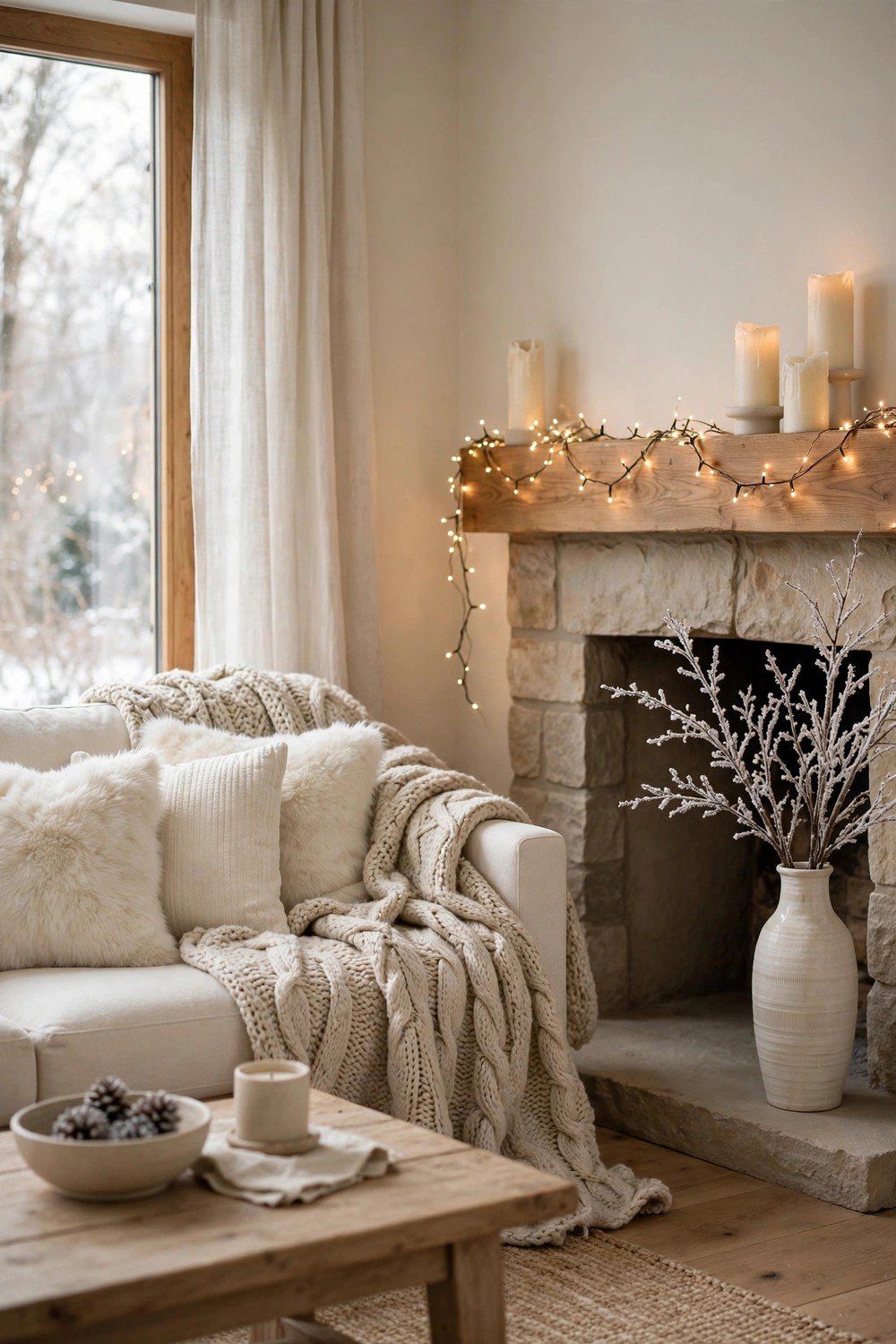
One of the easiest winter decor ideas for after Christmas is to leave your string lights exactly where they are — draped across the mantel, wound through bare branches, or trailing along a bookshelf. Warm-white fairy lights give a soft golden glow that makes long January evenings feel magical.
Just remove anything that reads "holiday": no baubles, no tinsel, no themed clips. Once the lights stand alone, they look like intentional ambient lighting for the whole season.
2. Swap Red and Green for Whites and Neutrals
The fastest way to shift a room from Christmas to winter is to change the color palette. Box up every red cushion cover, green garland, and plaid throw, and bring in layers of ivory, cream, warm grey, and soft taupe. These tones instantly calm a space and make it feel fresh again.
You don't need to buy everything new — white bedding and beige throws you already own work perfectly. Add one chunky knit in oatmeal or light grey, keep wood tones visible, and the room will read as cozy winter.
3. Layer Chunky Knit Throws Everywhere
Nothing says cozy winter like texture you can touch. Drape a thick cable-knit throw over the sofa arm, fold another across the foot of the bed, and keep one rolled in a basket by your reading chair. Knits in cream, oatmeal, and dove grey add softness without any seasonal branding.
Mix knit weights for depth — a fine ribbed throw under a chunky waffle one looks styled rather than accidental.
4. Build a Candle Corner in the Living Room
January evenings get dark early, so lean into candlelight. Group pillar candles of different heights on a tray — ivory and beeswax tones only — and add a few tealights in glass holders so the flames reflect and multiply.
Battery-operated candles with realistic flicker are great if you have pets or kids. Cluster them where you'll see them at night: beside the sofa, on a side table, or along the mantel.
5. Style a Vase of Snowy Branches
Bring the quiet beauty of winter indoors with a tall vase of bare branches dusted in white. Buy pre-frosted stems, or mist real branches with white spray paint for a snowy effect.
Place the arrangement in an entryway or beside the fireplace where its height draws the eye upward. Snowy branches feel sculptural and serene — a perfect post-holiday statement that needs no water and lasts all winter.
6. Hang a Winter Wreath Without Ornaments
Don't take the wreath hook off your door just because Christmas is over. Replace your decorated wreath with a simple winter version: eucalyptus, pine, olive branches, or dried grasses — no bows, baubles, or berries. A plain green or frosted wreath looks fresh and welcoming.
If you made your own wreath, strip it back to the greenery base and add a neutral linen ribbon instead.
7. Declutter the Mantel for a Calm Focal Point
After weeks of stockings and garlands, your mantel deserves to breathe. Clear everything off and start fresh with just three or four pieces: a pair of tall candlesticks, a small stack of books, and one natural element like pinecones or eucalyptus in a bud vase.
Negative space is your friend here. A sparse mantel feels peaceful and lets the fireplace architecture show — an instant reset for the whole room.
8. Use Pinecones as Natural Winter Accents
Pinecones are nature's perfect winter accessory — they last for months and suit every style. Fill a wooden bowl for the coffee table, line them along a windowsill, or tuck them into a lantern with a candle for a woodland glow.
Keep them natural brown or dust lightly with white paint for a frosted look. Either way, they add organic winter texture — and collecting them on a walk is free.
9. Add Sheepskin Throws to Chairs and Benches
A sheepskin draped over a dining chair, bench, or sofa back adds instant luxury and warmth. The soft white or cream fur breaks up hard furniture lines and invites you to sit down and stay a while.
Faux versions are affordable and look remarkably real. Use them where rooms feel cold: a leather armchair, a wooden entryway bench, or a desk chair.
10. Create a Cozy Reading Nook by the Window
January is made for reading, so claim a dedicated spot. Pull a comfortable chair up to the window, add a floor cushion or sheepskin, and place a small side table within reach for tea and books. A floor lamp with a warm bulb completes it.
Position the nook to catch whatever daylight winter offers — even pale winter sun feels restorative.
11. Display Bare Twig Arrangements in Bottles
For a minimalist take on winter branches, place a few slim twigs in glass bottles or bud vases scattered along a shelf or windowsill. The look is delicate and airy — a complete contrast to heavy holiday garlands.
Amber glass adds a warm glow when light passes through; clear glass keeps things crisp. Group bottles in odd numbers for a natural feel.
12. Switch to White and Cream Bedding
Your bedroom should feel like a fresh start in January. Strip off holiday-colored bedding and layer white sheets with a cream duvet, a chunky knit throw at the foot, and linen-look pillows in soft grey or taupe. The palette feels clean, calm, and hotel-like.
Add warmth through texture: a quilted coverlet, waffle-weave blanket, or flannel sheets in solid ivory.
13. Warm Up with a Lantern and Fairy Lights
A large lantern filled with warm fairy lights makes a stunning winter centerpiece. Set it on the mantel, hearth, or console table and switch it on at dusk — the glass panels magnify the glow and paint dancing patterns on the wall.
Choose black metal or natural wood for a timeless look, and fill the base with pinecones or faux snow.
14. Add Eucalyptus Stems to Every Room
Eucalyptus is the perfect post-Christmas greenery: it smells wonderful, lasts for weeks, and has a silvery tone that feels wintry without being festive. Place stems in the bathroom, on nightstands, in the kitchen — anywhere that needs a touch of life.
Use fresh stems in water or dried bundles that last for months. Silver dollar eucalyptus looks especially pretty, its round leaves catching the light.

15. Use Faux Fur Pillows on the Sofa
Swap holiday throw pillows for plush faux fur or sherpa cushions in cream, white, or light grey. Two or three on the sofa is enough — the texture does the talking and invites you to curl up.
Mix faux fur with one or two smooth linen pillows in a complementary neutral so the arrangement looks designed.
16. Style the Coffee Table with a Winter Tray
Corral your coffee table styling onto a single tray for an instantly tidy winter look. Arrange a candle, a small stack of books, a sprig of greenery in a bud vase, and one natural object like a stone or pinecone. The tray keeps everything contained and easy to move.
A wooden or woven tray adds warmth; a mirrored one bounces candlelight around the room. When guests arrive, lift the whole tray away in seconds.
17. Hang Simple Linen Curtains for Soft Light
Heavy drapes can make a room feel dark in January. Swap them for lightweight linen curtains in white or natural tones that filter winter sunlight into a soft, diffused glow — the room feels airier even on the shortest days.
Linen's natural texture adds warmth without weight. Hang panels high and wide so windows look larger.
18. Create a Hot Cocoa Station in the Kitchen
Give your kitchen a cozy winter focal point with a dedicated hot cocoa station: a tray with mugs, a jar of cocoa mix, marshmallows in a glass jar, and cinnamon sticks in a small cup. Add a candle or fairy lights nearby for evening charm.
This isn't just decor — it's an invitation to slow down. It makes the kitchen welcoming on cold mornings and dark evenings alike.
19. Add Warm Metallic Accents in Gold and Brass
While silver can feel cold in winter, warm metals like brushed gold, brass, and copper add a gentle glow. Swap in a few accessories: brass candlesticks, a gold-framed mirror, or copper mugs on open shelves. Small touches catch the light beautifully.
Three or four warm metallic pieces per room is plenty. They pair especially well with white-and-wood palettes.
20. Place a Woven Basket of Blankets by the Sofa
A large woven basket filled with rolled throws is both decor and pure practicality. Choose seagrass or rattan to complement your neutral palette, and fill it with blankets in varying creams, greys, and taupes so the textures show.
Keep it within arm's reach of the sofa so grabbing a blanket becomes effortless on chilly evenings.
21. Decorate with Dried Flowers and Grasses
Dried pampas grass, wheat stalks, and preserved flowers bring soft, feathery texture that suits winter perfectly. Arrange tall stems in a floor vase for a living room corner, or use smaller bundles on shelves and mantels. Zero maintenance, lasting for months.
Stick to neutral tones — creams, beiges, soft browns — so the look stays wintry rather than autumnal.
22. Use Mirrors to Bounce Winter Light
Short winter days mean making the most of every ray. Hang or lean a large mirror opposite a window to double the natural light in a room — it also makes small spaces feel bigger through the darkest months.
A round mirror with a thin brass frame suits most styles and adds a warm metallic touch. Place smaller mirrors where they catch candlelight in the evening.
23. Style Open Shelves with Winter Neutrals
Refresh kitchen or living room shelves for the season: remove anything holiday-themed and restyle with white ceramics, wooden bowls, stacked linen napkins, and a small plant or eucalyptus sprig. Keep the palette tight — whites, creams, natural wood, one soft grey.
Leave breathing room between objects; winter styling should feel calm, not crowded. Group items in threes and vary heights.

24. Add a Faux Fur Rug to Cold Floors
Bare floors feel especially chilly in January and February. Layer a faux fur or high-pile rug over your existing rug or directly on hard floors beside the bed or in front of the sofa. The softness underfoot is pure winter luxury.
White or cream faux fur works in most rooms; grey shag suits modern spaces.
25. Create a Winter Tablescape for Everyday
You don't need a dinner party to set a pretty table. Dress it for the season with a neutral runner, simple white plates, linen napkins, and a low centerpiece of candles and eucalyptus — everyday meals feel special through the long winter.
Keep the centerpiece low so conversation flows across it. Refresh the greenery every couple of weeks.
26. Hang String Lights in the Bedroom
Bring the fairy light magic into the bedroom for a dreamy winter retreat. Drape warm-white lights along the headboard, around a mirror, or across a curtain rod — far more flattering than overhead lighting on dark winter evenings.
Use lights with a timer so they switch on at dusk automatically — coming home to a softly glowing bedroom is one of winter's small luxuries.
27. Display White Ceramic Vases in Groups
White ceramics are a winter staple — clean, calm, endlessly versatile. Group three to five vases of different shapes and heights on a console, mantel, or dining table. Leave some empty; fill others with eucalyptus, dried grasses, or bare twigs.
The all-white grouping looks sculptural and serene in any style from farmhouse to modern.
28. Add Plaid in Neutral Tones
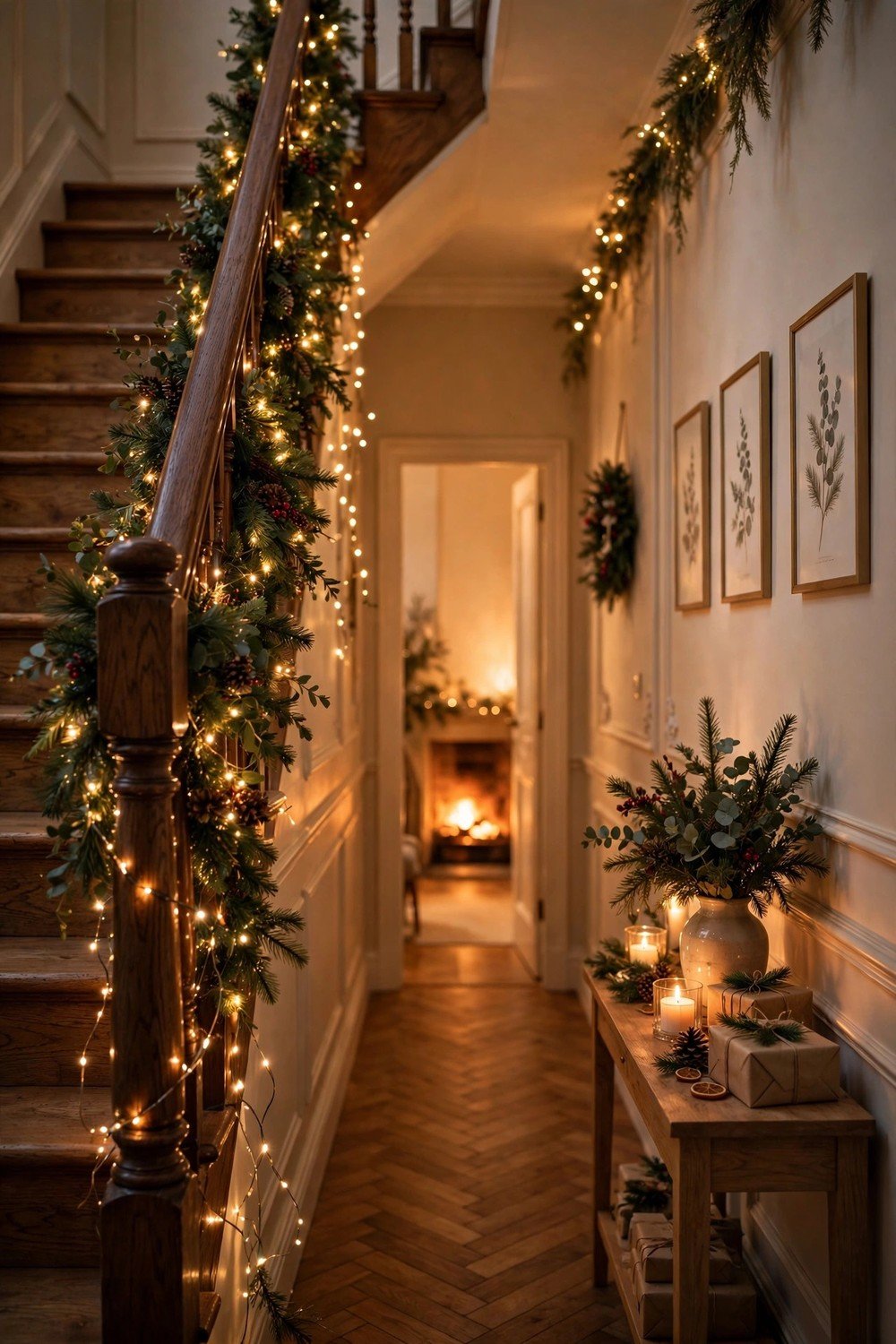
Plaid doesn't have to mean red tartan. In winter whites, greys, and taupes, plaid reads as classic and cozy rather than Christmassy. Look for throws, pillows, or a table runner in neutral checks and windowpane patterns.
One or two plaid pieces per room is the sweet spot — enough pattern interest without overwhelming your calm palette.
29. Style the Entryway for Winter Guests
Your entryway sets the tone, so give it a winter refresh: a textured runner in a neutral tone, a simple winter wreath on the inside of the door, and a basket for scarves and gloves within easy reach.
A small bench with a sheepskin throw feels welcoming; a candle or lantern on the console adds warmth. It's the first and last thing visitors see — one of the most overlooked winter updates.
30. Use Birch Logs as Decorative Accents
White birch logs are made for winter styling. Stack them in an unused fireplace, bundle a few with twine as a tabletop accent, or place tall birch poles in an empty corner. Their pale bark with dark markings looks striking against neutral walls.
Find decorative birch bundles at craft stores, or cut your own from fallen wood. They pair beautifully with candles, pinecones, and fairy lights.
31. Create a Window Display with Candles
Line windowsills with candles of varying heights for a look that's magical from both inside and out. Battery-operated tapers with timers are ideal — they switch on at dusk and create a welcoming glow visible from the street.
From inside, the candles frame the winter view and warm the glass; from outside, your home looks inviting on dark evenings. This Scandinavian-inspired trick is pure winter coziness with almost no effort.
32. Add Texture with Woven Wall Hangings
Bare walls can feel stark once holiday decor comes down. A woven wall hanging in cream, beige, or soft grey adds handmade warmth without any seasonal message — macramé, wool weavings, or simple tapestry styles all work.
Hang one above a console, beside the bed, or in that awkward hallway spot. Textile art softens a room acoustically too — a real bonus in winter when hard surfaces feel cold and echoey.
33. Refresh the Bathroom with Winter Whites
Don't forget the bathroom in your winter refresh. Swap in white or cream towels, add a small eucalyptus bundle to the shower or a vase on the counter, and place a candle where it's safe from splashes. A wooden bath mat or tray adds natural warmth.
These small changes make the bathroom feel like a spa retreat. Keep the palette strictly neutral so the space feels clean and calming.

34. Layer Rugs for Extra Warmth
Layering rugs is a designer trick that pays off in winter. Place a smaller textured rug — sheepskin, jute, or patterned flatweave — over a larger neutral base in the living room or bedroom. The layers add visual depth and real insulation underfoot.
Keep both rugs in the same color family so the look stays cohesive. It works especially well in rentals where you can't change flooring, and your feet will thank you on cold mornings.
35. Embrace Slow Winter Evenings with a Fireplace Glow
Whether you have a real fireplace, an electric insert, or just candles on the hearth, make the fireplace the heart of your winter evenings. Arrange seating to face it, keep a basket of throws nearby, and let the flickering light become your evening entertainment.
Even a non-working fireplace can glow: fill it with pillar candles of different heights or birch logs wrapped in fairy lights — quiet, glowing comfort for the season.
Frequently Asked Questions
When should I take down my Christmas decorations?
Most people take down Christmas decorations in the first week of January, with Twelfth Night on January 5th being the traditional date. Once the tree and ornaments are packed away, transition to winter decor right away. Start with big swaps like bedding and throw pillows, then layer in candles, branches, and cozy textures over the following days.
How do I decorate for winter without it looking like Christmas?
Remove Christmas-specific symbols while keeping the cozy elements. Take down anything red, green, holiday plaid, Santa figures, or "Merry Christmas" text. Keep fairy lights, candles, and greenery, but restyle them in whites, creams, and natural wood tones. Bare branches, eucalyptus, and pinecones read as winter when not paired with ornaments or bows.
What colors work best for winter decor after Christmas?
Stick to a calm neutral palette: whites, ivory, cream, warm grey, taupe, and soft beige, with natural wood tones for warmth. These colors reflect limited winter light and make rooms feel brighter and more peaceful. Add depth with texture instead of color — chunky knits, faux fur, and linen add richness, while small touches of brushed gold keep things from feeling flat.
Can I keep my fairy lights up after Christmas?
Absolutely — fairy lights are one of the best things to carry into January and February. Remove ornaments, tinsel, and holiday-themed clips, and let the warm-white lights stand alone. Drape them over mantels, through bare branches, or along headboards. On their own they read as intentional ambient lighting, and they make dark winter evenings feel magical.
How can I make my home feel cozy in January and February?
Focus on three pillars: light, texture, and warmth. Add warm lighting with candles, fairy lights, and lanterns to counter the early darkness. Pile on tactile textures like chunky knit throws and faux fur pillows. Address physical warmth with layered rugs and throws within reach of every seat. Together these create a cocooning effect that makes the coldest months inviting.
What greenery should I use for winter decor?
Choose greenery that reads as winter rather than holiday: eucalyptus, olive branches, dried grasses, pampas, bare twigs, and snowy branches all work beautifully. Avoid anything strongly tied to Christmas, like holly with red berries or decorated garlands. A simple eucalyptus or plain pine wreath on the door, plus a few stems around the house, keeps things fresh and seasonal.
How do I transition my mantel from Christmas to winter?
Clear everything off for a true reset, then rebuild with a few calm pieces: tall candlesticks or a lantern with fairy lights, a small stack of books, and one natural element like pinecones or eucalyptus in a bud vase. Keep the palette neutral and leave plenty of negative space. A sparse mantel feels peaceful and shows off the fireplace architecture.
Is it okay to leave a winter wreath up through February?
Yes — a plain winter wreath can stay up all season. Choose one without Christmas markers: no red bows, ornaments, or holiday signs. A wreath of eucalyptus, dried grasses, olive branches, or frosted greenery looks right from January into early March. If it starts looking tired, refresh it with a few new stems rather than taking it down.
How can I decorate for winter on a budget?
Winter decor is wonderfully budget-friendly since it relies on neutrals and naturals you may already own. Shop your home first: white bedding, cream throws, and plain candles are perfect. Collect pinecones and branches for free outdoors. Thrift stores are full of cheap white ceramics, baskets, and lanterns. Spend on one or two high-impact pieces like a chunky knit throw, and let texture do the rest.
Final Thoughts
Transitioning your home from Christmas to winter doesn't have to feel like a loss. When the ornaments and the red and green come down, what remains is the quiet beauty of the season itself — soft light, natural textures, and rooms that invite you to slow down. These winter decor ideas for after Christmas prove that January and February can be the coziest months of the year when your home is dressed for them.
Start with one room, or even one corner, and build from there. Keep the fairy lights glowing, layer in the knits and candles, and let your home settle into its calm winter rhythm. Before long you'll look forward to those long evenings — and that's the real magic of winter done well.